
It’s not hard to process a single bank account statement. With only one PDF document is involved the manual entry of data is feasible.
Divide this task into dozens of companies, multiple banks and various period of statements.
The situation has changed. The issue is evolving. A better bank statement conversion doesn’t only mean that you can make one document quicker. It’s about creating the system that will work as the amount of documents is increased.
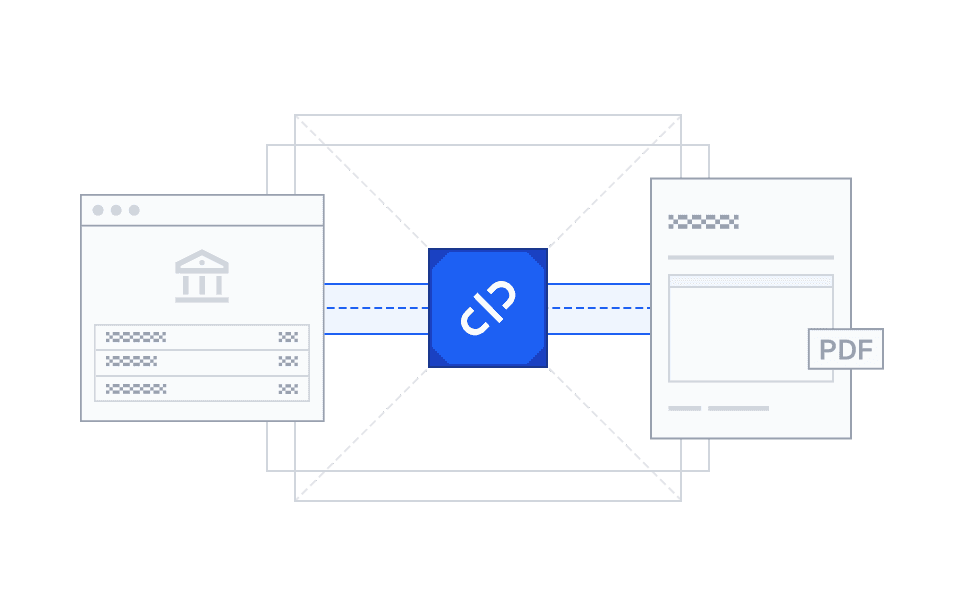
Image credit: docubrew.com
Repetition is the Bottleneck
Imagine that a firm in the field of accounting receives monthly PDFs of several clients. One client is Chase while the other uses Wells Fargo. Others send statements from Bank of America or Capital One.
Download each PDF file, then manually enter each transaction.
A bank statement converter can shift that workflow from transcription toward review. Docubrew sifts out the transaction numbers directly from the bank statement, instead of estimating financial values. The result is an organized file that can be inspected before it’s used. With the increase in document volume the distinction between them becomes more important.
Batch Processing Modifies the Equation
It might be beneficial to convert files manually on occasion. Accounting firms typically face a different reality. Docubrew allows for multiple documents to be uploaded and processed in a single operation, with the results available individually. Firms can now manage client files without having to manually build each transaction table.
Customers can change their bank statements to CSV format, and then look over the transaction details.
Scanned paper reports aren’t necessarily excluded. Docubrew comes with OCR for PDFs that have been scanned, which can be helpful if your client’s historical records comprise a mixture of native PDFs and scans.
Make outputs to help with the accounting work that is ahead
The conversion isn’t the end of the process. The transactions usually require a destination.
Docubrew exports CSV, Excel, and QBO. If you are a team member who needs to transfer a bank statement to Quickbooks, QBO provides an alternative output option in addition to the standard spreadsheet formats.
Businesses that convert bank statements data to Quickbooks frequently can create a more uniform process around the receipt of the statements, their processing, the processing and checking of the data, as well as the preparation of the needed records for the accounting workflow.
Human review remains crucial. Automating repetitive transcription can be performed, but bookkeepers remain responsible for making sure that financial data is accurate and finishing accounting work.
Client data is entitled to its own workflow decisions
The handling of more sensitive client data is associated with higher document volumes.
Docubrew provides two processing methods. Windows desktop applications can convert locally. Files are able to remain on the computer. Docubrew claims that cloud uploads are secure and the uploaded files as well as converted files will be automatically deleted after 24 hours.
Accounting practices could choose the method that best suits their particular needs.
Scale the Process, Not the repetitive Work
A growing bookkeeping practice should result in more financial documentation. The practice shouldn’t be able to automatically accommodate the more copy and paste work.
The question to ask is whether the method that worked for five clients would be effective for 50 clients.
By establishing a standard for how statements are received, converted, reviewed and prepared using accounting software, businesses can develop a process to be recurring rather than considering every PDF as an entirely new manual project.